


The Dawn of a New Mobile Era
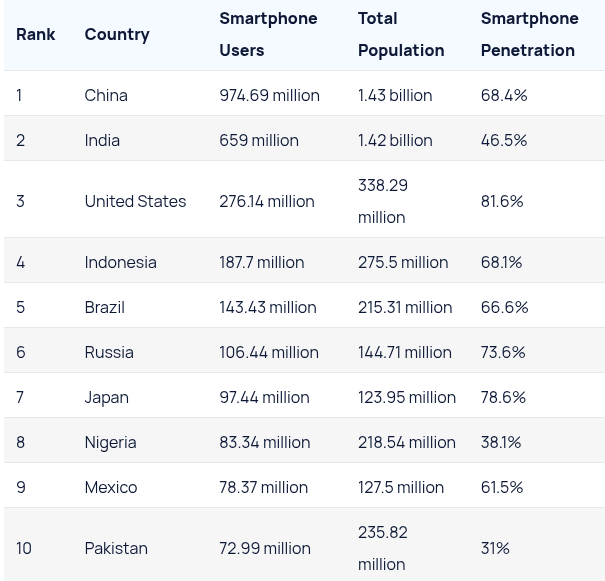
The global mobile application economy in 2026 is projected to surpass US$935 billion, powered by 5.78 billion smartphone users worldwide. What was once a technical choice Native, Cross-Platform, or Hybrid has become a strategic business decision shaping speed, scalability, and long-term growth. Performance gaps have narrowed significantly due to advances in hardware acceleration and modern rendering engines like Flutter’s Impeller and React Native’s Fabric.
Today’s users expect hyper-personalized, intuitive, zero-latency experiences, opening apps more than 11 times a day. Development efficiency and user experience now define competitive advantage. Understanding the technology stack is essential to thriving in this evolving mobile landscape.
Source: explodingtopics.com
Unpacking 2026's Mobile Market Dynamics
The mobile app market is poised for sustained growth, projected to maintain a robust 13% compound annual growth rate (CAGR) through 2030. This expansion is fueled by several pivotal forces:
Digital-First Strategy
Mobile has solidified its position as the primary interaction channel for consumers globally, consistently outperforming desktop access since 2017. Businesses must prioritize mobile to remain relevant.
AI Transformation
A staggering 40% of enterprise mobile applications are expected to integrate advanced AI capabilities by 2026. This shift moves beyond simple automation, enabling predictive analytics and hyper-personalized user experiences that were once the realm of science fiction.
5G/6G Rollout
The continued expansion of high-speed networks unlocks unprecedented possibilities for real-time augmented reality (AR) and virtual reality (VR) experiences. Heavy computing tasks can now be seamlessly offloaded to cloud servers, facilitating lightweight applications with immense capabilities.
These dynamics underscore a critical strategic reality the selection of a mobile development stack is intricately linked to both rising engineering costs and the urgent need for rapid iteration cycles. Cross-platform frameworks, for instance, have demonstrated their capacity to reduce development efforts by 50% to 80% and accelerate time-to-market by 30% to 40% compared to traditional native builds.
Choosing the Right Architecture
Choosing the appropriate architecture is a foundational decision with profound implications for performance, cost, and long-term maintenance. Each methodology offers distinct advantages tailored to specific business needs.
Native Development
Native applications, built specifically for a single platform, remain the unequivocal standard for unparalleled performance and integration. They offer full access to device APIs including advanced biometrics, ARKit, and specialized sensors, alongside superior security protocols. While requiring separate codebases and often necessitating larger, specialized teams, which translates to higher costs and longer time-to-market, native development is indispensable for
high-performance gaming, immersive AR/VR experiences, and fintech applications where stringent security and compliance are paramount.
Cross-Platform Development
Frameworks such as Flutter and React Native have revolutionized mobile development by enabling a single codebase to target both iOS and Android. This approach delivers significant benefits, including a 30–40% reduction in development costs, faster iteration cycles through features like “hot reload”, and broader talent availability. While there might be a marginal performance difference in graphics-heavy applications and a reliance on third-party plugins for access to cutting-edge OS features, cross-platform solutions are ideal for startups, Minimum Viable Products (MVPs), e-commerce platforms, and social media applications prioritizing speed and cost-efficiency.
Progressive Web Apps (PWAs) and Hybrid Apps
Progressive Web Apps operate within a browser environment but cleverly mimic native functionality, while Hybrid apps encapsulate web code within a native container. Their primary strengths lie in their exceptional cost-effectiveness, the absence of app store approval requirements for PWAs, and their inherent search engine optimization (SEO) capabilities. However, these benefits come with trade-offs limited hardware access and performance that generally lags behind both native and cross-platform native applications. They are highly effective for content-driven applications, internal tools, and scenarios where broad discoverability and rapid deployment are key.
Leading Frameworks and Technologies
The 2026 landscape is defined by the maturation and specialization of several powerful frameworks:
Native Powerhouses
SwiftUI + UIKit (iOS)
Apple’s declarative UI framework, SwiftUI, has become the de facto standard for iOS development, offering seamless integration with groundbreaking technologies like Vision Pro and ARKit. It provides an unmatched path for applications demanding deep ecosystem integration and premium user experiences, particularly crucial in high-revenue markets.
Jetpack Compose (Android)
Google’s modern toolkit for Android streamlines UI development, integrating effortlessly with the broader Android Jetpack components and Google’s AI-assisted debugging tools. Kotlin with Jetpack Compose is the preferred choice for markets where Android dominates, allowing for deep system customization and optimized background services.
The Cross-Platform Titans
The cross-platform market is a duopoly, with Flutter and React Native dominating. Both have evolved to deliver “near-native” performance, largely overcoming the early “clunky” perceptions.
Flutter (Google)
Built with Dart, Flutter’s unique architecture renders every pixel directly onto a GPU-accelerated canvas via the Impeller engine. This ensures smooth 60–120 FPS animations across devices, pixel-perfect UI consistency, and sub-200ms cold starts. Its ability to target mobile, web, desktop, and embedded devices from a single codebase makes it a versatile long-term investment, especially for visually rich, high-performance apps that demand identical branding across all platforms.
React Native (Meta)
Leveraging JavaScript/TypeScript, React Native boasts the largest developer ecosystem. The new Fabric architecture, replacing the legacy JavaScript bridge with the more efficient JSI (JavaScript Interface), has significantly boosted its performance. React Native excels for content-driven apps, social feeds, and e-commerce platforms where rapid feature updates (often via CodePush over-the-air updates) are critical, and a vast library of NPM packages facilitates rapid integration.
Specialized Platforms for Niche Needs
.NET MAUI (Microsoft)
The evolution of Xamarin, .NET MAUI is pertinent for enterprises deeply invested in the Microsoft tech stack.
It facilitates shared C# codebases for Android, iOS, and Windows desktop apps, ideal for internal business tools
and complex enterprise software prioritizing Microsoft ecosystem integration and security.
Ionic
Remains a top choice for web-first teams, enabling the wrapping of web technologies (HTML, CSS, JS)
into mobile containers via Capacitor. This is a cost-effective route for rapid prototyping, internal tools, and PWAs.
Unity
The definitive standard for gaming, immersive AR/VR applications, particularly for devices like the Meta Quest and Apple Vision Pro, where 3D rendering and interactive environments are central.
The Low-Code/No-Code (LCNC) Revolution
The LCNC movement is rapidly transforming how applications are built, with projections indicating that 70% of new business applications will be developed using LCNC technologies. This paradigm shift dramatically reduces development time by up to 90% and resource allocation by 70%. Leading tools include Softr for web apps/CRMs, Bubble for complex UIs, FlutterFlow for visual Flutter building, and Adalo. Enterprise-grade platforms like Mendix and Appian are increasingly employed for rapid business process management (BPM) and internal digital transformation initiatives.
Strategic Selection: Key Questions for Decision-Makers
The selection of a mobile development methodology transcends technical preference; it is a critical business decision. Decision-makers must consider several pivotal questions:
Hardware Access
Does the application require deep hardware integration (e.g., advanced biometrics, real-time video processing, specialized sensors)? If so, native development remains the optimal choice.
Speed-to-Market
Is rapid validation and deployment a primary goal, particularly for MVPs? Cross-platform or LCNC solutions offer significantly faster routes to market.
Long-Term Maintenance
What is the projected budget for ongoing maintenance and updates? Cross-platform solutions generally reduce long-term overhead by centralizing the codebase.
SEO / Discoverability
Is discoverability via search engines critical for the application’s success? PWAs and Web Apps often present a better initial investment than purely native apps.
Team Expertise
What are the existing skill sets within the development team? Aligning technology choices with current proficiencies (e.g., React Native for JavaScript-proficient teams) can optimize efficiency and minimize hiring friction.
Conclusion
Mobile app development in 2026 is no longer defined by isolated technical preferences but by strategic alignment with business objectives. Native, cross-platform, and web-first methodologies each offer distinct advantages across performance, cost, scalability, and speed-to-market. With AI integration, expanding 5G networks, and rising user expectations reshaping the ecosystem, technology selection directly influences competitive positioning, operational efficiency, and long-term sustainability in an increasingly digital-first economy.
Ultimately, success lies in aligning architecture with product vision, team capability, and market demands. Organizations that make deliberate, data-driven stack decisions will be best positioned to innovate, iterate rapidly, and capture sustained value in the evolving global mobile economy.