


The conversation surrounding Artificial Intelligence has shifted from theoretical to tactical. No longer a futuristic concept confined to research labs, AI-powered automation has become a formidable force reshaping the very fabric of business operations. For leaders across the globe, they can strategically deploy it to build resilient, efficient, and intelligent enterprises. This is a revolution of fundamental transition from rigid, rule-based processes to dynamic, self-learning workflows that unlock unprecedented value.
Organizations that fail to embrace this transformation risk being outmaneuvered by more agile competitors. The adoption of intelligent automation is now a strategic imperative, a critical lever for enhancing efficiency, mitigating risk, and securing a definitive competitive edge in a market projected to reach an astonishing $1.8 trillion by 2030. This guide provides a comprehensive overview of navigating this new landscape with confidence and clarity.
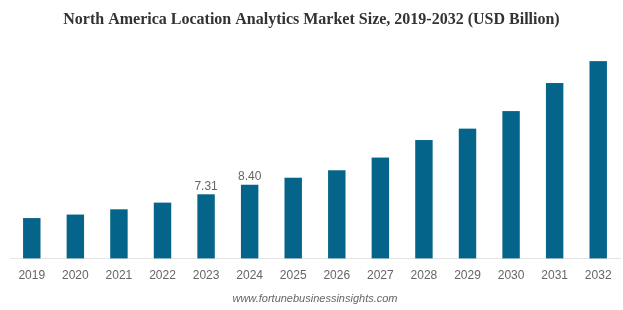
[Source: fortunebusinessinsights.com]
The New Automation Paradigm
For decades, business process automation (BPA) has been synonymous with tools like Robotic Process Automation (RPA). These systems are masters of mimicry, executing repetitive, rule-based digital tasks like data entry or form filling with speed and precision. While effective for structured, predictable tasks, their utility shatters when faced with variability or unstructured data.
Enter AI-powered automation. This new paradigm integrates advanced AI technologies to create systems that don’t just follow instructions but can learn, adapt, and reason. The core difference lies in cognitive capability. While traditional automation is a digital laborer, AI automation is a digital thinker. It leverages a suite of powerful technologies:
- Machine Learning (ML): The engine of adaptation. ML algorithms analyze historical data to identify patterns, predict future outcomes, and refine their performance over time without explicit reprogramming.
- Natural Language Processing (NLP): The bridge to human communication. NLP enables systems to read, interpret, and respond to human language, powering everything from sophisticated chatbots to automated document analysis.
- Generative AI & Large Language Models (LLMs): The creative force. This revolutionary technology can generate novel content by driving advanced content creation and hyper-personalized customer interactions.
In essence, AI elevates automation from executing pre-programmed tasks to handling complex, judgment-based workflows. It can process unstructured data like emails and images, make autonomous decisions, and continuously improve, automating up to 80% of tasks within a given process, a significant leap from the 30% achievable with traditional tools.
Quantifying the AI Automation Advantage
The drive toward AI automation is fueled by substantial, measurable returns that directly impact the bottom line and operational excellence. The benefits are transformative.
Operational Supremacy and Cost Mastery
At its core, AI automation is an engine for hyper-efficiency. By automating high-volume, repetitive work 24/7, it dramatically reduces processing times and liberates human employees to focus on high-value strategic initiatives. Companies consistently report 50-75% faster task completion. This surge in productivity translates directly into significant cost savings, with typical reductions ranging from 20-40%. A McKinsey report highlight that over 45% of companies deploying Generative AI have already achieved cost reductions in key areas like service operations.
De-Risking Operations with Unwavering Accuracy
Human error is an expensive and unavoidable part of manual processing. AI systems, however, execute tasks with relentless precision, minimizing errors that can lead to financial loss, compliance breaches, or reputational damage. In the financial sector, this capability is paramount. American Express, for example, leverages AI to analyze transactions and prevent an estimated $2 billion in potential fraud annually. This level of risk mitigation is simply unattainable through human oversight alone.
Elevating the Human Experience
Perhaps one of the most profound benefits of AI automation is its positive impact on both customer and employee experience. For customers, AI-powered chatbots and virtual assistants provide instant, 24/7 support, while personalization engines deliver tailored experiences that build loyalty. T-Mobile, for instance, used sentiment analysis to better understand customer frustrations, leading to a 73% reduction in complaints. Internally, automating monotonous, soul-crushing tasks improves employee morale and frees up talent for more creative, engaging, and strategic work, the very work that drives innovation.
This shift toward meaningful, high-impact work is already redefining how teams collaborate and perform, a transformation explored in greater depth in our perspective on The Future of AI in Workplace Productivity, where we examine how intelligent systems are augmenting human capability rather than replacing it.
Transforming Industries from the Ground Up
The application of AI automation is not confined to a single department or industry. From finance to healthcare, its impact is both broad and deep.
- Finance & Accounting: The days of manual document review are numbered. JPMorgan Chase’s COIN platform famously reduced the time required to analyze complex legal documents from 360,000 hours to mere seconds. Similarly, Mastercard’s AI-driven Decision Intelligence platform analyzes billions of transactions in real time to detect and prevent fraud before it occurs.
- Customer Service: Bank of America’s virtual assistant has successfully handled over 1.5 billion client interactions, resolving queries and executing tasks without human intervention. This demonstrates the immense scalability of AI in managing customer relationships.
- Human Resources: Global consumer goods giant Unilever transformed its recruitment process with AI, using it to scan resumes and assess video interviews. This initiative saved an incredible 70,000 hours of work and helped diversify its candidate pool.
- Supply Chain & Logistics: Efficiency in logistics is a game of inches. Walmart uses a proprietary AI solution to optimize delivery routes, cutting 30 million unnecessary miles. Meanwhile, UPS employs its own AI platform to calculate the most efficient routes for its drivers, saving millions of fuels and time.
A Pragmatic Guide to Implementation
While the promise of AI automation is immense, the path to successful implementation is paved with challenges. A strategic, clear-eyed approach is essential to avoid common pitfalls and maximize return on investment.
Organizations often grapple with poor data quality, difficulties integrating with legacy systems, and the black box problem of unexplainable AI decisions. Furthermore, workforce resistance and a shortage of skilled AI talent can stall progress. To navigate this gauntlet, leaders should adopt a set of proven best practices.
- Align Automation with Business Outcomes: Technology is a means, not an end. Begin by identifying high-impact, bottleneck-prone processes where automation can deliver tangible value. Every initiative must be tied to clear success criteria, whether it’s cost reduction, faster service, or improved compliance.
- Start with Low-Risk Pilots: Avoid a big bang rollout. Instead, launch a narrowly scoped pilot project to test the technology, identify integration gaps, and build organizational confidence. A successful pilot serves as a powerful proof-of-concept to secure broader buy-in.
- Champion Human-in-the-Loop AI systems Oversight: For critical or high-stakes decisions, AI should augment, not replace, human judgment. Implement checkpoints where a human expert can validate, correct, or override an AI’s decision. This not only ensures accountability but also provides crucial feedback to refine the AI models over time.
- Invest in a Foundation of Data Governance: AI systems are only as good as the data they are trained on. Establish a robust framework for managing data quality, ensuring it is clean, standardized, and unbiased before it is fed into any model. This is the non-negotiable foundation for reliable AI.
- Prioritize Upskilling and a Culture of Collaboration: Proactively address workforce fears by communicating the purpose of AI to empower employees, not replace them. Invest in training programs to upskill your team, preparing them for new roles that involve collaborating with AI systems and managing automated workflows.
- Ensure Governance and Proactive Compliance: Establish clear ownership for every automation and create a governance framework to manage them. With regulations like the EU AI Act becoming effective, and frameworks like the NIST AI Risk Management Framework gaining prominence, embedding compliance and security into the design of your AI systems is critical.
What's Next for AI Automation?
The evolution of AI automation is accelerating, with several powerful trends poised to define the next era of business operations.
The most significant shift is the rise of AI agents’ autonomous systems that can reason, plan, and act independently to achieve complex goals. These agents will orchestrate entire workflows by communicating with other specialized systems. We are also witnessing the expansion of Hyperautomation, which unifies multiple technologies (RPA, ML, NLP) to automate intricate, end-to-end business processes at an enterprise scale. Looking forward, automation will become predictive, using data to anticipate issues and autonomously optimize workflows before problems arise.
Ultimately, organizations are moving toward a unified intelligence layer, a central control tower for monitoring and optimizing all automation initiatives, breaking down silos, and providing complete operational visibility.
Conclusion
AI-powered automation is the central nervous system of future-ready enterprises. It offers a clear path to radical efficiency, enhanced decision-making, and superior experience for both customers and employees. The journey requires careful planning, strategic investment, and a commitment to fostering a culture of human-AI collaboration. The leaders who act decisively today to integrate intelligent automation into the core of their strategy will not just survive the coming disruption but will define it by emerging as the dominant forces in their respective industries.