


Rise of Autonomous Enterprise
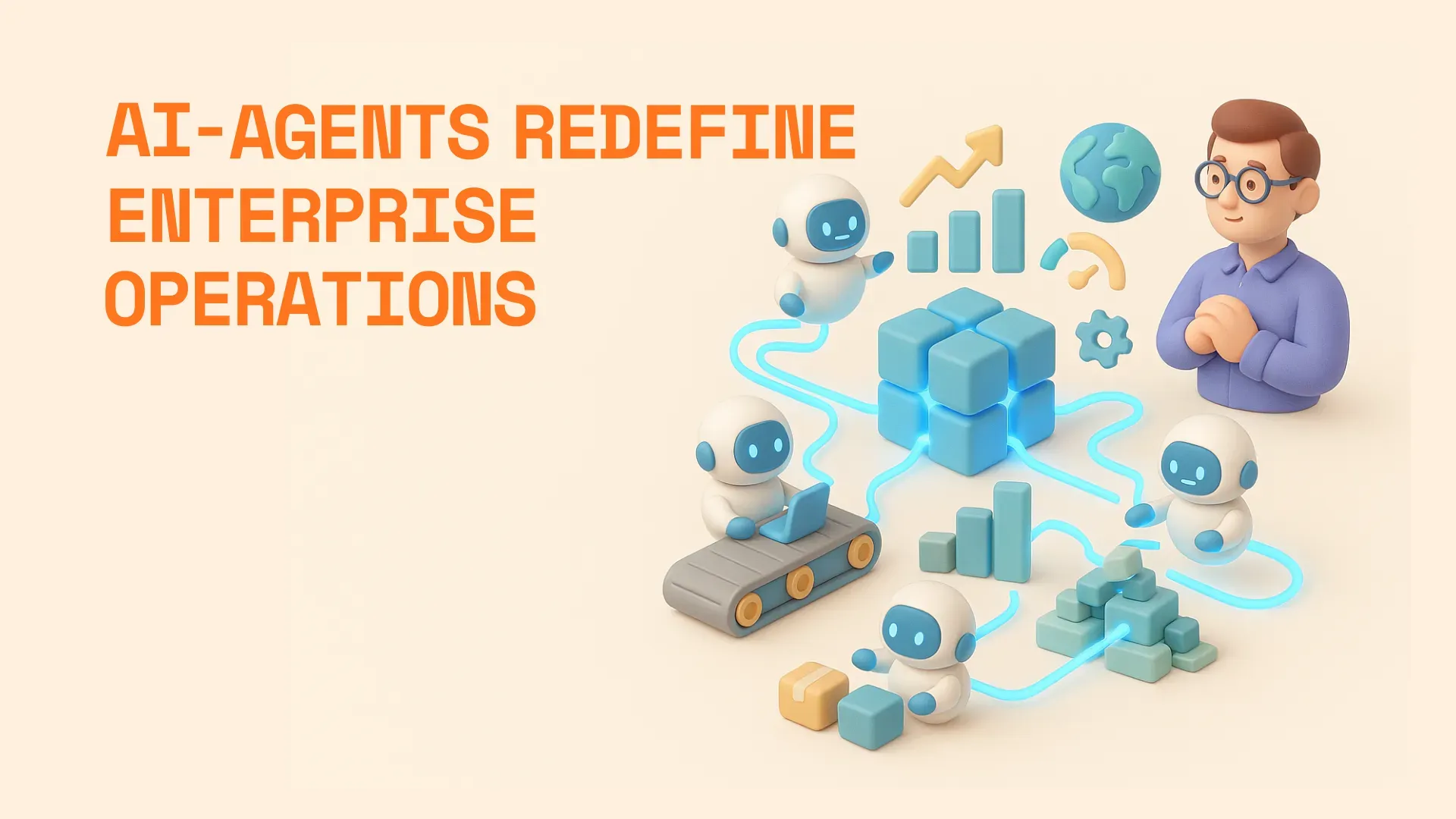
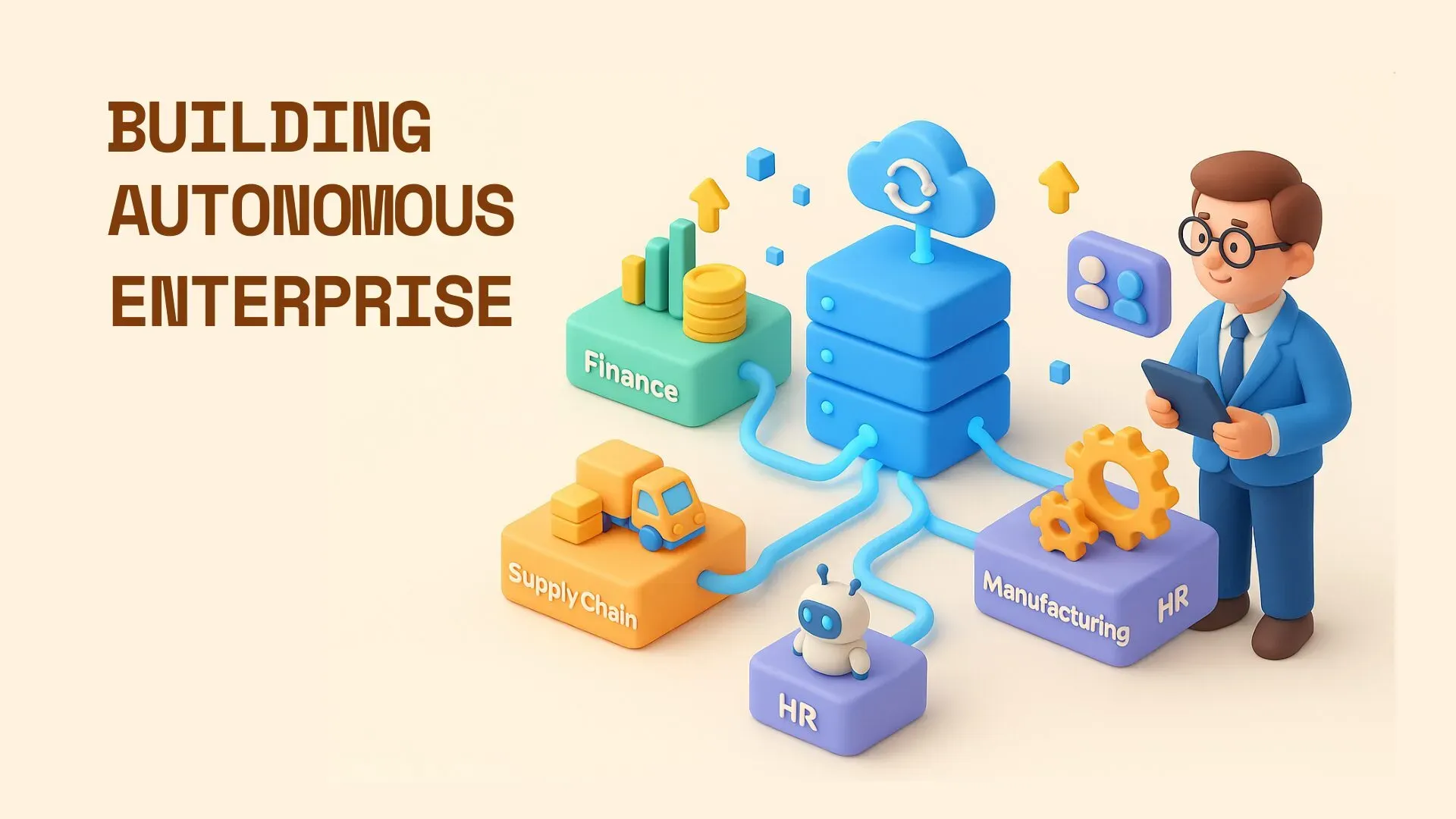
A significant transformation is currently taking place within the modern enterprise. Beyond the conversational capabilities of generative artificial intelligence, a more advanced paradigm has developed in the form of self-learning AI agents. These autonomous systems are not merely responding to prompts but are proactively observing, planning, acting, and most critically improving over time. As of 2026, we are moving decisively from an era of AI-assisted tasks to one of AI-driven workflows. This evolution marks the dawn of the autonomous enterprise, where intelligent agents function less like tools and more like a dynamic, digital workforce capable of orchestrating complex operations with minimal human intervention.
Deconstructing the Autonomous Agent
What fundamentally separates a self-learning agent from its predecessors, like rule-based bots or standard large language models (LLMs)? The distinction lies in its architecture of continuous improvement. These agents operate on a perpetual feedback loop, often described as “Observe-Plan-Act-Learn”. They initiate their process by perceiving their digital environment, analysing data sourced from emails, Customer Relationship Management (CRM) systems, or operational dashboards. Next, they use sophisticated reasoning modules, typically powered by an LLM, to decompose a high-level goal into a sequence of executable steps. Subsequently, they proceed to execute actions by utilising application programming interfaces (APIs) and system integrations to carry out functions such as updating records, dispatching communications, or reallocating resources.
The concluding stage, namely learning, is undoubtedly the most transformative. Through mechanisms like Reinforcement Learning (RL), agents receive feedback on their actions either from explicit human correction or by measuring outcomes against predefined objectives. A successful outcome generates a reward, reinforcing the strategy used, while a failure prompts the agent to adjust its approach. This capacity for self-correction and optimization means that an agent’s performance on day 1,000 is exponentially better than on day one, a compounding advantage that static automation can never achieve.
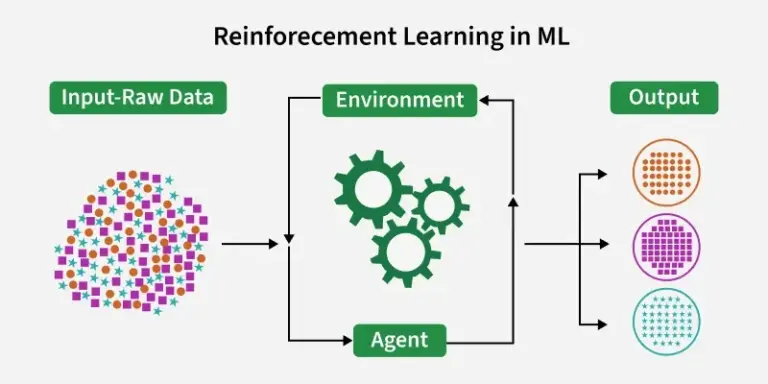
Source: geeksforgeeks.org
Cognitive Engine: Memory and Adaptation
An agent’s capacity for learning is fundamentally reliant upon its proficiency in memory but this capability is considerably more advanced than merely maintaining a record of previous interactions. Modern agentic architectures utilize a tiered memory system to enable robust, long-term performance. Short-term memory, or history, maintains context within a single interaction, allowing the agent to understand follow-up questions. Nonetheless, it is within long-term memory that genuine learning is solidified. It involves creating structured summaries of past interactions, user preferences, and successful strategies, often stored in specialized vector databases. This persistent memory ensures an agent can personalize interactions and apply lessons learned across countless future tasks.
This internal knowledge is further enhanced by Retrieval-Augmented Generation (RAG), which allows an agent to query external, authoritative data sources such as technical manuals, financial reports, or internal wikis. This grounds the agent’s reasoning in factual, up-to-date information, mitigating the risk of hallucinations and ensuring its actions are based on verifiable data. This combination of experiential memory and factual grounding creates a powerful cognitive engine, enabling agents to navigate the complexities of real-world business environments with remarkable accuracy and adaptability.
Theory to Transformation: A Cross-Industry Revolution
The impact of self-learning agents is no longer theoretical and is actually delivering measurable value across industries. Projections for the agentic artificial intelligence market are substantial, indicating a significant surge in enterprise adoption.
In financial services, autonomous agents are revolutionizing operations from customer service to risk management. Leading banks are deploying agents to handle complex customer inquiries, orchestrate fraud investigations in real-time, and automate back-office processes like loan approvals. These systems adapt to emerging fraud patterns and the changing requirements of customers, thereby improving both security and user experience.
Healthcare is another sector undergoing a profound agentic shift. The agentic AI in the healthcare market is projected to grow at a CAGR of over 45% from 2026, driven by applications in diagnostics, patient management, and operations. Agents can analyze medical images to detect anomalies, manage patient scheduling based on real-time hospital capacity, and even assist in drug discovery by simulating molecular interactions. This frees clinicians from administrative burdens, allowing them to focus on high-value patient care.
In retail and e-commerce, the customer journey is being entirely reimagined. Agents now act as sophisticated personal shoppers, researching products, comparing features, and providing personalized recommendations based on a user’s expressed needs. For businesses, this means optimizing product data and website content not for keywords, but for the conversational, intent-driven queries of AI agents, fundamentally changing the nature of digital marketing and sales.

Source: bcg.com
Human Imperative in an Autonomous World
The rise of autonomous systems naturally raises questions about the future of human work. However, experience from early adopters reveals that agentic AI is not a replacement for human expertise but an augmentation of it. The most successful deployments treat agents as collaborative partners, not just automation tools. This requires a strategic approach to integration and focusing on redesigning workflows rather than simply inserting an agent into an existing process.
This transition towards collaboration further consolidates the foundational productivity improvements already evidenced through the adoption of enterprise AI. As examined in our preceding article, the role of AI Role in Enhancing Workplace Efficiency, organisations are observing tangible enhancements in productivity, the quality of work, and employee empowerment when artificial intelligence is implemented in a strategic manner. Autonomous agents constitute the subsequent phase of this progression, advancing from task-specific support to the orchestration of entire workflows.
Lessons from enterprise deployments highlight the critical importance of human oversight and governance. Success depends upon several fundamental factors, including substantial investment in evaluation frameworks to establish trust, ensuring that each action undertaken by an agent is observable, and acknowledging that human oversight remains indispensable for making judgments, addressing ethical considerations, and managing high-stakes or ambiguous situations. The “human-in-the-loop” model, where agents escalate complex decisions for human approval, remains a cornerstone of responsible AI implementation. This collaborative framework ensures that the efficiency of automation is balanced with the wisdom and ethical grounding of human oversight.
Conclusion
As self-learning AI has moved beyond the hype cycle and into the core of enterprise strategy. The transition from passive tools to autonomous teammates is unlocking unprecedented levels of advancement. These systems, which learn and compound in value with every interaction, represent a durable competitive advantage for organizations that embrace them.
The path forward requires more than just technological investment it demands a cultural shift. Businesses must focus on reskilling their workforce, redesigning processes around human-agent collaboration, and establishing robust governance to manage the power of autonomy responsibly. The organizations that master this new dynamic will not only optimize their current operations but will also build the foundation for a truly agile and intelligent enterprise, ready to thrive in an increasingly autonomous world.