



The Executive Power of UX Audits
In today’s hyper-competitive digital landscape, superior user experience (UX) is fundamental to sustainable growth and market leadership. A UX audit is a structured, data-driven evaluation of a digital product aimed at identifying usability gaps, design inconsistencies, and accessibility barriers that limit user satisfaction and business performance.
A well-executed UX strategy can increase website conversion rates by up to 400%, while a poor experience drives customer churn, with 89% of users switching to competitors after just one negative interaction. These statistics highlight how directly UX influences revenue, retention, and brand perception.
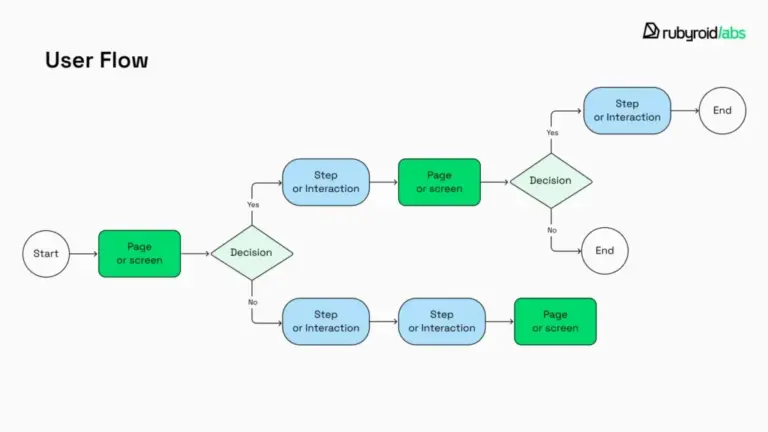
Source: rubyroidlabs.com
For individuals responsible for decision-making, both performance and timing are of paramount importance. A significant 40% of visitors cease engagement with a website if it takes longer than 3 seconds to load, and a delay of merely 1 second can adversely affect user engagement, which can reduce conversions by 4.42%. Comprehensive UX audits should be conducted every 6–12 months or immediately after major redesigns, rapid feature rollouts, or declining engagement metrics. Effective audits combine evaluation and usability testing to uncover actionable insights. Beyond visual improvements, UX audits lower Efficiency and deliver measurable ROI through optimized conversion pathways.
Strategic Business Value and ROI
A User Experience (UX) audit serves as an essential, comprehensive assessment for any digital product, effectively identifying the frequently unseen barriers that insidiously undermine revenue streams. Its significant advantages resonate throughout the entire business lifecycle, encouraging an environment of continuous optimisation and sustained competitive resilience.
Conversion and Revenue Growth
Audits serve to identify points of friction within the buyer journey. For instance, one e-commerce platform experienced a 40% increase in sales following a targeted audit of its mobile navigation. In a particularly notable case, an organisation succeeded in reducing support tickets by 142% after addressing a singular issue related to button interaction.
Operational Efficiency
Early usability issue identification reduces redesign costs and technical debt while easing support workloads by eliminating recurring frustrations and improving operational efficiency.
Customer Retention
By reducing churn, audits build brand loyalty, strengthen long-term relationships, and establish lasting market authority for sustainable business growth.
Competitive Advantage
Continuous UX monitoring keeps products aligned with evolving market expectations and advancing technologies, including AI integration, positioning businesses at the forefront of innovation.
As explored in our article on Future of Web Development Trends for 2026, Modern ecosystems are shifting toward AI-first architectures and predictive UX. UX audits ensure measurable performance, usability, and long-term competitive advantage.
The Foundational Phase Benchmarks
Before commencing any audit, it is essential to establish a solid foundation of benchmarks with accurate precision. This vital preparatory step ensures that subsequent findings are not only objective but also inherently actionable, providing a clear framework for continuous improvement.
1. Stakeholder Alignment
The entire process begins with a rigorous cross-functional alignment. Input obtained from Product Managers, Developers, Customer Support, and Marketing teams is of great importance, as it reveals underlying priorities and highlights the most common user frustrations requiring immediate attention.
2. Defining User Personas
Auditors must cultivate profound empathy for specific audience segments. The precise delineation of user personas ensures that the audit evaluates the design against the authentic needs, motivations, and behaviors of target users, rather than abstract or generalized principles.
3. Data Gathering and Goal Configuration
Quantifiable success metrics, or Key Performance Indicators (KPIs), must be precisely defined upfront to provide a clear measure of impact. Critical metrics for evaluation include:
The quintessential indicator of overall product health and effectiveness.
The percentage of users who exit a website or application after viewing only a single page, signaling potential engagement issues.
Reflecting both session frequency and the stickiness of key features, crucial for long-term user engagement.
Google’s fundamental measures encompassing Largest Contentful Paint (LCP), First Input Delay (FID), and Cumulative Layout Shift (CLS), which are critical for optimal user experience and search engine ranking.
For a deeper explanation of how these metrics influence both visibility and revenue, explore our detailed guide on Google Core Web Vitals, which outlines practical strategies for measuring and optimizing performance across devices.
The Multi-Step Audit Framework
A comprehensive audit complies with a systematically structured and replicable process. This methodological precision guarantees that no vital aspect is unintentionally neglected, thereby facilitating methodical enhancement of the product.
Step 1: User Journey and Behavior Analysis
Leveraging powerful tools such as heatmaps and session recordings, auditors meticulously traverse the product from the user’s precise perspective. This critical step facilitates the identification of rage clicks, dead clicks, and points where users backtrack or inexplicably abandon a funnel, highlighting areas of acute frustration.
Step 2: Performance and Technical Audit
Speed continues to be an essential element of an optimal user experience. Auditors utilise diagnostic platforms such as Google Lighthouse to meticulously assess load times, mobile responsiveness, and cross-browser compatibility, thereby ensuring a seamless user interaction across all platforms.
Step 5: Accessibility and Compliance
Ensuring a product is inclusively designed for the estimated 1 billion individuals globally living with disabilities is not merely a legal mandate but a profound business necessity. Audits carefully check for:
Adherence to Web Content Accessibility Guidelines for perceivable, operable, understandable, and robust design.
The provision of meaningful alt-text for images and the correct application of semantic HTML to aid assistive technologies.
Guaranteeing that all functionalities are fully operable without reliance on a mouse is crucial for many users.
Critical Evaluation Checklist
A holistic UX audit delves into several interconnected domains, each critical for a superior digital experience. The following table highlights key evaluation points within these categories:
1. Navigation & Structure
Organize content logically with clear labels and limited main menu items. Include a search feature that handles spelling errors.
2. Visual Design
Maintain consistent colors and fonts, create a clear visual hierarchy, and use white space effectively for better readability.
3. Call-to-Action (CTA)
Use high-contrast buttons with action-oriented, benefit-focused text. Place them where users are most likely to take action.
4. Forms & Checkout
Keep forms simple by removing unnecessary fields. Use real-time validation, allow guest checkout, and show progress indicators.
5. Content Quality
Write clear, scannable content without jargon. Communicate the main value within the first few seconds.
6. Mobile Optimization
Ensure buttons are large enough to tap easily, use a responsive design, and support smooth gesture navigation.
Turning UX Audit Insights Actionable
The raw data collected from an audit must be carefully synthesised into a clear and actionable programme for ongoing enhancement, thereby ensuring that insights are translated into tangible progress.
1. Issue Severity Categorization
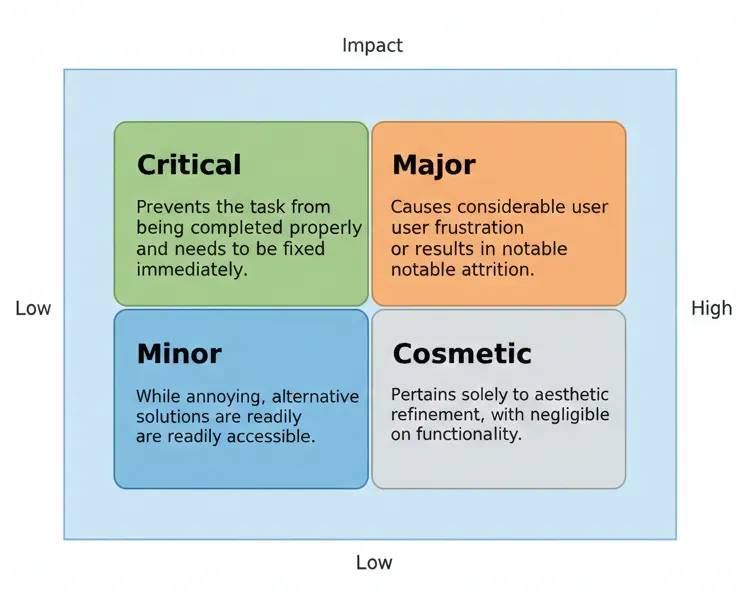
Not all findings require immediate intervention. Issues are systematically prioritised through the utilisation of an Impact Effort matrix, thereby facilitating focused allocation of resources.
Critical: Prevents the task from being completed properly and needs to be fixed immediately.
Major: Causes considerable user frustration or results in notable attrition.
Minor: While annoying, alternative solutions are readily accessible.
Cosmetic: Pertains solely to aesthetic refinement, with negligible impact on functionality.
2. Prioritization Models
Established models such as MoSCoW are employed to ensure the most impactful fixes are meticulously scheduled. Quick wins initiatives characterized by low effort and high impact are rigorously prioritized to demonstrate immediate, tangible ROI.
3. Reporting and Implementation
The culmination of the audit is a comprehensive report, frequently documented in platforms like Figma or via spreadsheets. This critical deliverable contains:
Screenshots and Annotations: Visual evidence that unequivocally illustrates identified issues.
Data References: Direct links to session replays or analytics trends, substantiating findings.
Actionable Recommendations: Specific, practical suggestions for targeted improvement.
Post-audit, organizations must commit to a cycle of Continuous UX Monitoring. This involves implementing proposed changes, conducting rigorous A/B testing to validate hypotheses, and continuously monitoring metrics like the System Usability Scale (SUS), Net Promoter Score (NPS), and Customer Satisfaction (CSAT) to guarantee enduring product health and user delight.
Conclusion
A structured User Experience audit is not a discretionary activity but a strategic necessity for sustainable digital advancement. Through benchmarking performance, identifying points of friction, and prioritising high-impact enhancements, organisations convert usability insights into quantifiable improvements in conversion rates, customer retention, operational efficiency, and long-term competitive resilience.
Through systematic evaluation, accessibility compliance, and continuous monitoring, UX audits create a repeatable framework for optimisation. In an era defined by speed, performance, and evolving expectations, disciplined UX auditing ensures digital products remain performant, profitable, and positioned for enduring market leadership.