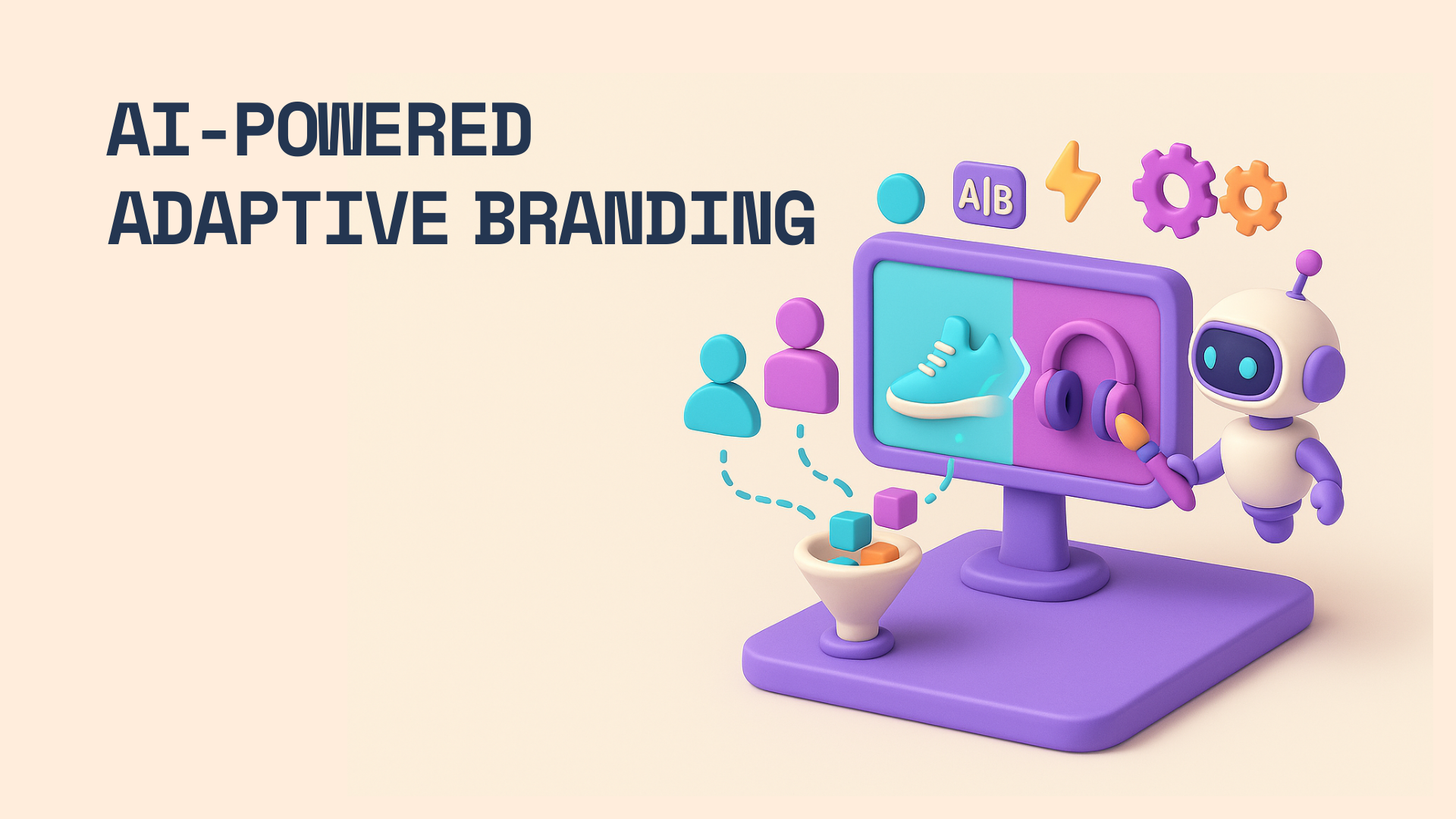



The gold standard of branding was a monument, meticulously carved from rigid guidelines, polished to perfection, and built to last for generations. This fortress-like approach, however, is now collapsing under the relentless pressure of digital acceleration and cultural flux. In today’s landscape, the monument is being replaced by a living organism, a brand that breathes, learns, and evolves in real time. This is the dawn of Adaptive Branding and Marketing, a revolutionary strategy for the AI-driven era.
The shift is an imperative for survival and growth. The data is unequivocal: adaptive campaigns have been shown to outperform their static counterparts by a staggering 34% in engagement and 22% in conversions. This is not a mere incremental improvement. It represents a fundamental rewiring of how businesses connect with consumers, moving from a built to a built to learn. By embracing this paradigm, organizations are unlocking unprecedented ROI, slashing customer acquisition costs, and dramatically increasing customer lifetime value.
Deconstructing the Adaptive Strategy: Beyond the Buzzword
At its core, an adaptive strategy is the continuous, data-driven evolution of a brand’s expression and its marketing execution. It is a commitment to listening and responding to the market, not just broadcasting to it. To fully grasp its power, we must distinguish its key components.
Adaptive Branding vs. Adaptive Marketing
While intertwined, these two concepts serve different functions. Adaptive Branding is about the soul and expression of the brand. It treats the brand’s identity as a dynamic conversation, using modular design systems and intelligent governance to ensure the brand can flex its tone and visuals without breaking its core promise. In contrast, Adaptive Marketing is the tactical execution of the real-time adjustment of the marketing mix (Product, Price, Place, Promotion) to capitalize on emerging opportunities, whether they are geographic trends, cultural moments, or shifts in consumer sentiment.
A Crucial Distinction
The terms adaptive and agile are often used interchangeably, but they describe different things. Agile Marketing, a methodology borrowed from software development, is about how teams work in sprints, with rapid iterations, and a focus on internal process efficiency. Adaptive Marketing, on the other hand, is about how the strategy responds to the outside world. It is an external-facing philosophy focused on reacting to live data, technological shifts, and consumer behavior. An agile team is the engine, and an adaptive strategy is the GPS navigating the ever-changing market terrain.
The Central System of the Modern Brand
If adaptive strategy is the new paradigm, Artificial Intelligence is the catalyst that makes it possible at scale. AI acts as the brand’s central nervous system, transforming mountains of data from a backward-looking report into a forward-looking, reactive engine.
AI’s role is multifaceted:
Perception Mapping: Machine learning algorithms now function as a global focus group, constantly monitoring social media, reviews, and news to detect subtle shifts in brand perception. They can identify when a brand’s tone feels inauthentic or when sentiment begins to dip, providing an early warning system before a crisis can escalate.
Predictive Adaptation: Beyond just reacting, AI can forecast where audience attention is heading. Analyzing search trends, social cues, and performance signals allows marketers to anticipate needs and position their brand in the path of future demand, not just in the wake of past behavior.
Real-Time Personalization at Scale: AI is the only technology capable of delivering truly unique experiences to millions of individuals simultaneously. It ensures that while the brand’s core belief remains fixed, its voice can flex to be playful on one platform, empathetic on another, and authoritative elsewhere, all based on the context of the individual user.
This technological shift also creates a new, vital organizational role in the AI Operator. This is a strategic rudder for the company, responsible for designing AI-driven experiments, staying ahead of technological trends, and translating machine insights into actionable brand strategy.
The Framework for a Living Brand
Adaptation without structure is chaos. To evolve without losing its identity, a brand needs a robust framework. This involves both a layered identity system and a reimagined customer journey.
The Five-Layer Adaptive Brand Framework
This model provides the blueprint for balancing consistency with agility:
Lazy Loading
Core Belief System
The immutable anchor. This is the brand’s purpose, mission, and values. This layer does not change.
Modular Identity
A flexible ecosystem of visual and verbal assets. This includes alternate logo sets, a spectrum of color palettes, and defined tonal variations that can be deployed for different contexts.
Intelligent Listening
The always-on AI tools and real-time dashboards that track sentiment, intent, and competitive movements.
Dynamic Storytelling
Content designed not as a finished product, but as a starting point for interaction. This includes reactive campaigns and narratives that evolve based on audience participation.
Feedback Governance
The essential human oversight. This layer ensures that all AI-driven adaptations are ethical, authentic, and aligned with the core belief system.
The Adaptive Marketing Loop
The traditional linear funnel Awareness, Consideration, Conversion is broken. It fails to capture the messy, non-linear reality of today’s customer journey. The adaptive model replaces it with a continuous, stage loop of engagement.
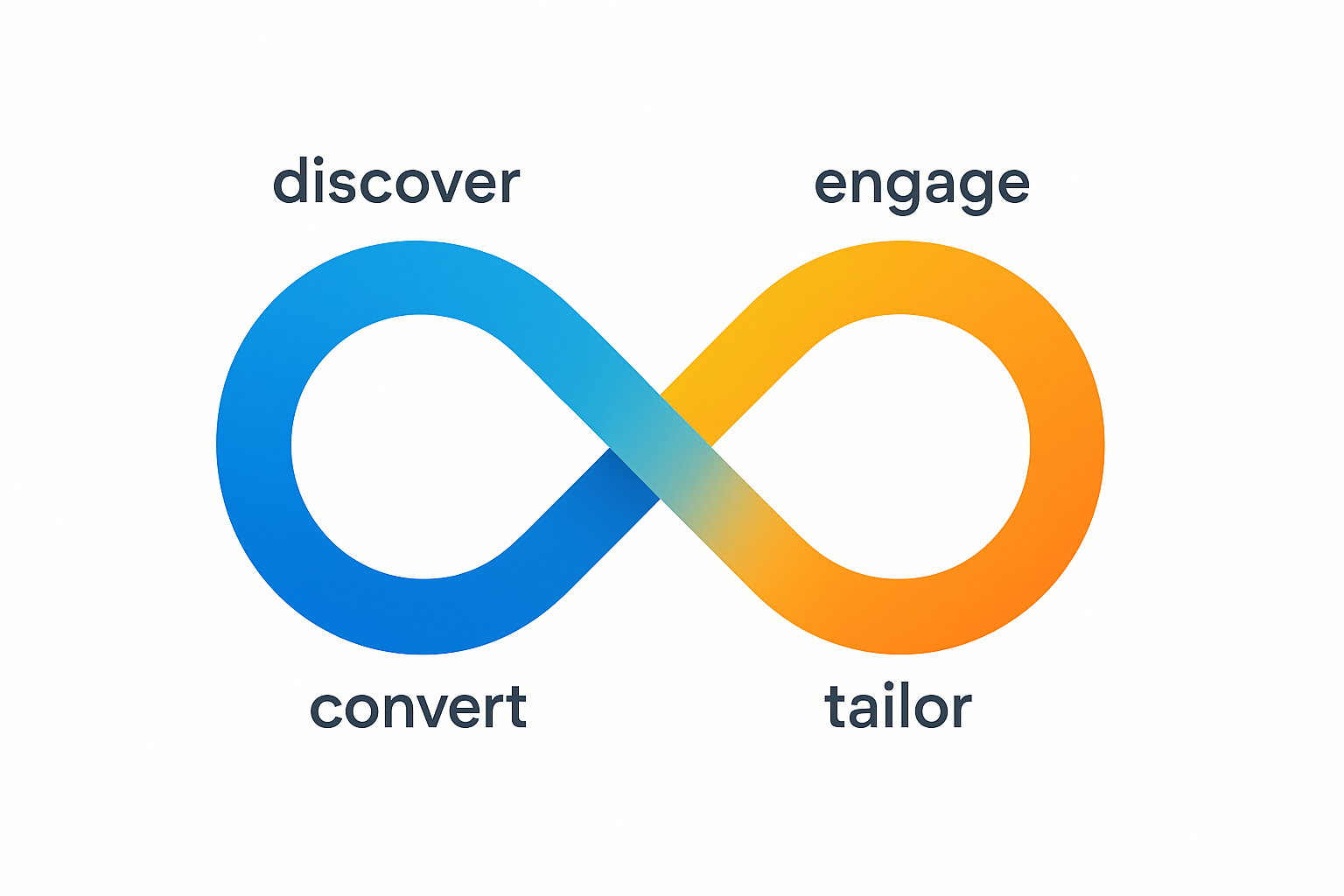
This cyclical model focuses on building a self-sustaining ecosystem of loyalty and growth, where delighted customers become the most powerful advocates.
From Theory to Execution: Making Adaptation a Reality
Implementing an adaptive strategy requires a profound shift in both mindset and operations. It means moving away from rigid annual plans and tactics toward dynamic systems of behavior.
A cornerstone of this execution is real-time budget rebalancing. Instead of locking in budgets quarterly, adaptive marketers use automated rules to fluidly reallocate spend.
For a scenario, if engagement on a social channel drops below a certain threshold by noon, spend is automatically shifted to a high-performing search campaign.
If Cost Per Action (CPA) exceeds a benchmark, bids are paused. This financial agility ensures that every dollar is working as hard as possible at any given moment.
This is powered by a modular design and content. Adaptive brands are built as ecosystems, not monuments. They possess logo variations for different platforms, motion systems that adapt to screen size, and a library of verbal tones from playful to empathetic that can be deployed instantly by AI based on the customer interaction context.
Proof in Performance: Real-World Victories
The success of this model is not theoretical. Leading brands are already reaping the rewards:
The Economist utilized programmatic adaptive strategies to iterate its creative at newsroom speed, generating 650,000 new prospects and achieving an incredible 10:1 ROI.
KLM Royal Dutch Airlines transformed its social media channels into live conversion surfaces, addressing customer objections and offering solutions in real time. This adaptive approach is credited with generating over €25 million in revenue.
During the global pandemic, Apple masterfully pivoted its #shotoniphone campaign to #madeathome, demonstrating profound contextual awareness. Similarly, Coca-Cola shifted its massive advertising budget to geo-targeted digital messaging that supported local community initiatives, proving that a global brand can act with local empathy.
Conclusion
As we delegate more optimization tasks to machines, the role of human oversight becomes more critical than ever. The greatest risk of an AI-driven strategy is crossing the fine line between personalization and manipulation. Building and maintaining trust is the ultimate differentiator, and this requires strict ethical guardrails. Transparency about data usage, unwavering compliance with privacy regulations like GDPR and CCPA, and a firm commitment to using technology to serve not exploit customers are non-negotiable.
The future of branding is fluid. The strongest, most resilient identities of the next decade will be those that prove they can listen, learn, and evolve without losing their soul. AI is becoming the nervous system of the modern brand, enabling a level of responsiveness that was once science fiction. Success in this new Engagement Economy will belong not to the biggest or the oldest brands, but to the most adaptive.