


In the saturated digital landscape, consumers are bombarded with an unprecedented volume of content, making it increasingly challenging for brands to capture attention, let alone inspire action. The time when the same advertisement was used for everyone, regardless of their interests or needs, is now over. Today, success is not measured by the breadth of an audience reached, but by the depth of the connection forged.
This is where the transformative power of ad personalization comes into play, a strategic imperative that has evolved from a novel tactic to the very cornerstone of effective digital marketing. Ad personalization is the sophisticated practice of leveraging customer insights to deliver advertisements of unparalleled relevance to a specific individual. It is a departure from generic broadcasting and a pivot towards tailored, meaningful dialogue.
By understanding and catering to individuality, online business advertising can create an experience that is not only more engaging but profoundly more effective.
Why Personalization Is
Non-Negotiable
Trends do not drive the strategic shift towards personalization, but rather tangible results and shifting consumer expectations. In a world of infinite choice, personalized marketing messages are a beacon, guiding consumers to what they truly value. The benefits are substantial and impact both the business’s bottom line and the customer’s journey.
The global digital advertising market was valued at approximately USD 488.4 million. Looking ahead, it is expected to grow significantly, reaching an estimated USD 1,164.25 million by 2030 driven by a robust CAGR of 15.4% between 2025 and 2030.
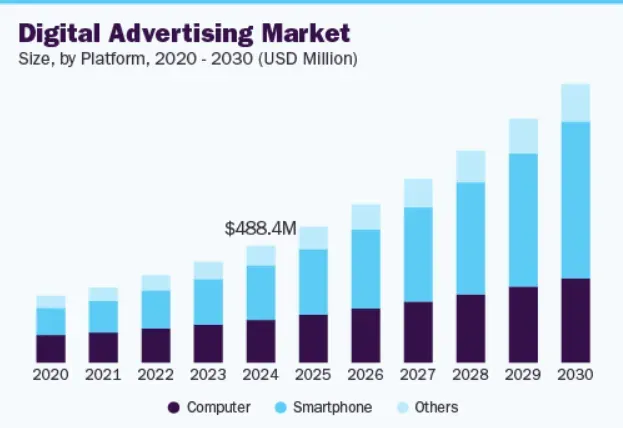
[Source: grandviewresearch.com]
Elevating Engagement and Driving Conversions
When an advertisement resonates with a user’s interests or immediate needs, it ceases to be an interruption and becomes a welcome piece of content. This relevance is the key to unlocking higher engagement. This engagement translates directly into commercial success. A survey found that 29% of participants would be more likely to purchase based on a personalized ad. By providing genuinely interesting content, brands can dramatically increase click-through rates and guide consumers more effectively down the conversion funnel.
Forging Lasting Customer Loyalty
Personalization fosters a powerful sense of recognition and value. When a brand demonstrates that it understands a customer’s preferences, it does so by recommending a complementary product or reminding them to re-order a favorite item. It builds a foundation of trust. This is more than a transaction but a relationship. This cultivation of trust and loyalty is critical for long-term customer retention and advocacy.
Maximizing ROI and Eliminating Ad Waste
Investing in ads that don’t resonate is simply money lost. Personalization sharpens the focus of marketing efforts, ensuring that advertising budgets are allocated to audiences most likely to be considerate. By targeting specific segments with tailored messages, businesses can minimize wasted ad spend and increase the efficiency of marketing efforts. This precision targeting not only strengthens the return on investment (ROI) but also provides clearer data on campaign performance, allowing for continuous refinement.
The Data Collection and Types of Personalization
The foundation of any successful personalization strategy is robust, ethically sourced customer data. This information is the fuel that powers the engine of relevance. Key data collection methods include:
Cookies: These small pieces of code track user activity across the internet, gathering data on visited websites, viewed products, and search queries.
Website Analytics: Tools that provide deep insights into on-site user behavior, such as traffic sources, click patterns, and time spent on pages.
Social Media Platforms: These platforms collect a wealth of information from user profiles, likes, shares, and comments to inform their ad targeting.
CRM Systems: Centralized databases that store comprehensive customer information, from purchase history to service interactions.
Direct Feedback: Surveys and feedback forms allow customers to provide information about their preferences and needs voluntarily.
With this data, brands can deploy several sophisticated types of personalization:
Demographic Personalization
The most traditional form involves targeting ads based on static attributes like age, gender, income level, and occupation. While basic, it remains a useful layer for broad segmentation.
Behavioral Personalization
This dynamic approach tailors ads based on a user’s online actions. For instance, if a user browses for high-performance running shoes on a retail site but doesn’t complete the purchase, they may later see ads for those exact shoes on social media or other websites. This is a direct response to demonstrated intent.
Context-Based Personalization
This powerful method delivers ads based on the user’s current situation. It can be broken down further into location, time, weather, and device based.
Predictive Personalization
Leveraging machine learning, this advanced technique analyzes historical data to predict customers’ future behavior, needs, and wants. A customer who frequently buys organic dog food might be proactively shown ads for new, eco-friendly pet toys, anticipating their next likely interest.
Retargeting
Often cited as one of the most effective forms of personalized ads, retargeting specifically targets users who have previously interacted with a brand. It is exceptionally effective at addressing shopping cart abandonment and keeping the brand top-of-mind during the consideration phase.
If you’re looking to boost your SEO performance by focusing on key KPIs, be sure to check out this in-depth guide.
From Insight to Action: A Practical Framework
Executing a world-class personalization strategy requires a structured, disciplined approach:
Collect Data Transparently: Gather diverse customer data from all available touchpoints while being crystal clear with users about what you are collecting and why. Analyze Patterns: Dissect the data to identify meaningful patterns, preferences, and behavioral trends.
Create Meaningful Segments: Group customers into segments based on shared characteristics to enable targeted messaging.
Develop Personalized Creative: Craft unique messaging, offers, and ad creative for each segment, using dynamic content that adapts to user behavior.
Leverage Omnichannel Personalization: Ensure a consistent and seamless personalized experience across all channels, including your website, email, social media, and paid online advertising.
Monitor, Test, and Optimize: Continuously track key performance indicators (KPIs) and use A/B testing to refine every element of your strategy, making data-driven decisions to improve performance.
Prioritizing Privacy and Trust
The immense power of personalization comes with significant responsibility. Consumer skepticism regarding data privacy is a major hurdle. The demand for transparency and control is growing, with users wanting to know precisely how their data is being used.
To overcome this, businesses must prioritize ethical data practices. Building trust is paramount. This means being transparent about data collection, providing clear value in exchange for that data, and implementing robust security measures. By treating customer data with respect and focusing on delivering genuine convenience and value, brands can turn potential privacy concerns into an opportunity to build deeper, more resilient customer relationships.
Conclusion
Ad Personalization is no longer an optional extra in the digital marketing toolkit. They are the engine of modern customer engagement. By meticulously collecting and analyzing data, segmenting audiences with precision, and crafting highly relevant content, businesses can cut through the digital noise to deliver messages that are not only seen but valued. While the path is paved with ethical considerations that must be navigated with care, the destination is clear. A future where advertising is helpful, relevant, and respectful is not only possible but is the definitive key to achieving sustainable growth and a commanding competitive edge in the dynamic digital world.